Website Design & Development

How Google AI Overviews Are Reshaping SEO and What Businesses Need to Do

Why Traditional SEO Alone Is No Longer Enough

For more than two decades, SEO has largely been about improving your website’s visibility on Google’s search results page. Businesses invested in keyword research, backlinks, content marketing, technical SEO, and website optimization to earn higher rankings.
While these practices remain essential, the way people consume search results is changing rapidly.
With the introduction of Google AI Overviews, users are increasingly receiving direct, AI-generated answers at the top of search results. Instead of clicking through multiple websites, they often find the information they need within Google’s AI summary. This shift doesn’t mean SEO is disappearing—it means SEO is evolving.
Businesses now need to optimize their websites not only for Google’s traditional ranking algorithms but also for AI systems that evaluate content quality, authority, and relevance before generating responses.
Think of it this way:
  • Traditional SEO helps your website rank.
  • Generative Engine Optimization (GEO) helps your content become a trusted source for AI-generated answers.
Organizations that understand this shift early will have a significant advantage over competitors who continue relying on outdated SEO tactics.

Understanding the Difference Between SEO and GEO

Many people assume GEO will replace SEO, but that’s not how modern search works.
Instead, GEO builds on the foundation of strong SEO.

Traditional SEO focuses on:

  • Ranking individual web pages
  • Optimizing keywords
  • Building quality backlinks
  • Improving page speed
  • Technical website optimization
  • Mobile responsiveness
  • Search intent

GEO focuses on:

  • Building topical authority
  • Publishing trustworthy, experience-driven content
  • Structuring information clearly for AI interpretation
  • Using schema markup effectively
  • Creating comprehensive answers instead of keyword-heavy articles
  • Demonstrating expertise and credibility
Businesses that combine both approaches are more likely to remain visible as search engines continue integrating AI into the user experience.

Why EEAT Matters More Than Ever

Google has consistently emphasized the importance of Experience, Expertise, Authoritativeness, and Trustworthiness (EEAT).
In an AI-driven search environment, these principles become even more important.
AI systems don’t simply look for pages containing keywords.
They attempt to identify content that appears reliable, well-structured, accurate, and genuinely helpful.

For example, if someone searches:

“How can I secure my business website?”

An AI system is more likely to reference an article that:
  • Explains practical security measures
  • Includes current industry insights
  • Demonstrates real-world experience
  • Uses reputable sources
  • Covers the topic comprehensively
rather than a generic 600-word article repeating the phrase “website security” dozens of times.
For businesses, this means investing in high-quality content that educates readers instead of simply targeting keywords.

Structured Data Is Becoming More Valuable

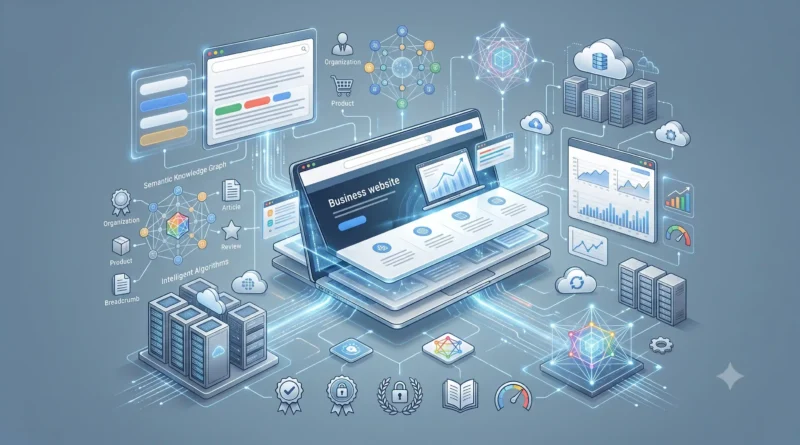
One of the biggest opportunities for businesses is implementing structured data (Schema Markup) correctly.
Schema helps search engines understand the context of your content.
Rather than guessing what a page is about, structured data clearly communicates information such as:
  • Articles
  • FAQs
  • Products
  • Services
  • Reviews
  • Organizations
  • Authors
  • Events
  • Breadcrumbs
Although schema alone won’t guarantee inclusion in AI-generated responses, it improves the way search engines interpret your website and supports better visibility across search features.
For businesses investing in long-term SEO, structured data should be considered a standard practice rather than an optional enhancement.

Why Website Performance Still Matters

AI search experiences still rely on high-quality websites.
If your website is slow, poorly maintained, difficult to navigate, or filled with technical issues, neither users nor search engines will have a positive experience.
Important factors include:
  • Fast loading speed
  • Mobile-friendly design
  • HTTPS security
  • Clean navigation
  • Accessible content
  • Optimized Core Web Vitals
  • Logical internal linking
  • Crawlable architecture
A professionally developed website creates a stronger foundation for both traditional SEO and AI-driven search visibility.

How Content Strategy Needs to Change

One of the biggest mistakes businesses continue to make is creating content solely around keywords.
Instead of asking:
“Which keyword should we rank for?”
Businesses should ask:
“What questions are our customers trying to solve?”
AI systems are designed to provide helpful answers.
Therefore, content that genuinely solves problems is more likely to remain valuable over time.
For example, instead of publishing:
“Website Development Services”
consider creating valuable resources such as:
  • How to Choose the Right Website Development Company
  • Website Redesign Checklist for Growing Businesses
  • Common Website Security Mistakes That Cost Businesses Money
  • Why Website Speed Matters for SEO
  • SEO vs GEO: What’s the Difference?
These articles naturally establish expertise while supporting your commercial service pages.

The Role of Technical SEO in the AI Era

Many businesses believe AI search is all about content.
In reality, technical SEO continues to play a vital role.
Search engines still need to:
  • Discover your pages
  • Crawl your content
  • Understand your website structure
  • Process structured data
  • Identify canonical URLs
  • Index updated information
Ignoring technical SEO can limit your visibility regardless of how well-written your content is.

Regular technical audits, clean site architecture, XML sitemaps, robots.txt optimization, canonical tags, and proper indexing remain essential components of a successful digital strategy.

What This Means for Business Owners

Whether you run a local service business, an eCommerce store, or a corporate website, AI-powered search is changing how potential customers discover information.
Businesses that invest in:
  • original educational content
  • secure website development
  • technical SEO
  • structured data
  • strong user experience
  • consistent website maintenance
will be better positioned to earn visibility in both traditional search results and AI-generated search experiences.

For companies working with a website designing company in Mumbai, web development company in Mumbai, or an experienced SEO company in Mumbai, this is the ideal time to ensure websites are built not just for today’s search engines—but for tomorrow’s AI-powered search ecosystem.

How to Optimize Your Website for Google AI Overviews (GEO)

The Businesses That Will Win Are the Ones That Build Trust

Search engines have always rewarded useful content, but AI-powered search takes this a step further.
Instead of simply matching keywords, AI attempts to answer a user’s question by selecting information that appears accurate, well-structured, and trustworthy.
That means businesses should stop asking:

"How do I rank for this keyword?"

and start asking:

"How can I become the most reliable source on this topic?"

This mindset is the foundation of Generative Engine Optimization (GEO).

10 Practical GEO Strategies Every Business Should Implement

1. Create Content That Solves Real Problems

One of the biggest mistakes businesses make is publishing articles that exist only to target keywords.

For example, instead of writing:

create articles such as:
  • How Much Does Website Development Cost in Mumbai?
  • Common Mistakes Businesses Make When Building Their First Website
  • How to Choose a Website Development Company
  • Why Website Security Should Be Part of Every Development Project
These topics naturally attract readers while also supporting your service pages.
Remember, AI systems prioritize useful answers—not keyword repetition.

2. Build Topical Authority Instead of Publishing Random Blogs

Publishing one article about SEO every few months isn’t enough.
Google and AI search systems are more likely to trust websites that demonstrate consistent expertise across an entire subject.
For example, instead of publishing isolated articles, build a complete content cluster:

Website Development

  • Website Design Trends
  • Website Development Process
  • Website Security
  • Website Speed Optimization
  • Website Redesign Guide

SEO

  • Technical SEO
  • Local SEO
  • AI SEO
  • GEO
  • Core Web Vitals
  • Google Search Console

Digital Marketing

  • Content Marketing
  • Google Ads
  • Social Media Marketing
  • Conversion Optimization

This interconnected structure helps search engines understand that your website has deep expertise in these areas.

3. Write Like an Expert, Not Like a Salesperson

Many agency websites focus on promoting their services rather than educating readers.
For example, instead of repeatedly saying:

“We are the best website designing company in Mumbai.

Demonstrate your expertise by explaining:
  • How secure websites are developed
  • Why performance optimization matters
  • How Core Web Vitals affect rankings
  • Why structured data improves visibility

4. Improve Content Structure

AI systems process content more effectively when it is organized logically.
Every article should include:
  • A clear introduction
  • Descriptive headings (H2 and H3)
  • Short paragraphs
  • Bullet points where appropriate
  • Tables or comparisons
  • Real-world examples
  • Frequently Asked Questions (FAQs)
  • A concise conclusion with actionable advice
A clean structure benefits both readers and search engines.

5. Add First-Hand Experience

Google’s Helpful Content guidance emphasizes the value of experience.
Whenever possible, include practical examples from your own work.
For instance, if you’ve helped a client improve website speed, migrate to HTTPS, recover from a hacked website, or redesign a slow-performing site, share those experiences (without revealing confidential information).
Real-world insights are difficult to replicate and strengthen your credibility.

6. Make Your Website Technically Strong

These elements improve the overall quality and accessibility of your website.
  • HTTPS implementation
  • XML sitemap
  • robots.txt configuration
  • Canonical tags
  • Structured data
  • Mobile responsiveness
  • Core Web Vitals
  • Image optimization
  • Internal linking
  • Crawlability
  • Page speed
Key areas to review include:
Even the best content can struggle if the website itself has technical issues.

7. Don't Ignore Internal Linking

This creates a stronger content ecosystem and encourages visitors to explore more of your website.
  • Website Development Services
  • SEO Services
  • Website Maintenance
  • Technical SEO
  • Website Security
  • Core Web Vitals Guide
  • Shopify Development Services
For example, if this article is about Google AI Overviews, you could naturally link to:
Internal links help users discover related content and help search engines understand the relationship between topics.

8. Focus on Search Intent

A user searching for:

“Google AI Overviews”
may want to understand:
  • What AI Overviews are
  • How they affect SEO
  • Whether rankings are changing
  • How businesses should adapt
Your article should answer all of these questions in one place instead of forcing readers to search elsewhere.
Comprehensive, intent-focused content is more valuable than multiple thin articles.

9. Build Trust Beyond Your Website

Search engines evaluate more than just your pages.
Trust is also influenced by your overall digital presence.
Businesses should maintain:
  • An updated Google Business Profile
  • Consistent business information across directories
  • Customer reviews
  • Case studies
  • Industry certifications
  • Secure contact forms
  • Active social profiles

These signals contribute to a stronger online reputation.

10. Think Beyond Rankings

Success in AI-powered search isn’t measured only by where your website appears.
Instead, consider:
  • Are users finding answers quickly?
  • Are they spending more time on your website?
  • Are they exploring related content?
  • Are they contacting your business?
  • Are they returning later?
The goal is to build trust and authority—not just traffic.

How WebTechneeq Can Help Businesses Prepare for AI Search

As AI-powered search continues to evolve, businesses need websites that are fast, secure, well-structured, and built with long-term visibility in mind.

At WebTechneeq, we believe effective SEO begins with a strong technical foundation. Whether you’re looking for a website designing company in Mumbai, a web development company in Mumbai, an eCommerce development company, or a trusted SEO company in Mumbai, our approach focuses on creating websites that perform well for both users and search engines.

From responsive design and secure development to technical SEO, structured data implementation, and ongoing optimization, our goal is to help businesses stay competitive as search continues to evolve.

Rather than chasing algorithm updates, we focus on building digital experiences that deliver lasting value.

Common Mistakes That Can Reduce Visibility in AI Search

Rather than chasing algorithm updates, we focus on building digital experiences that deliver lasting value.

  • Publishing articles written only for keywords.
  • Using AI-generated content without human editing or expertise.
  • Ignoring website speed and Core Web Vitals.
  • Missing structured data.
  • Poor internal linking.
  • Thin content that lacks depth.
  • Outdated statistics or references.
  • Weak page experience on mobile devices.
  • No author expertise or business credibility.
  • Publishing content without regular updates.

Businesses that avoid these issues are better positioned to earn trust from both users and AI-powered search systems.

The Future of SEO in the Age of AI

AI Search Isn’t Replacing SEO—It’s Redefining It

Whenever Google introduces a major change, businesses often ask the same question:

“Is SEO dead?”
The answer is no.
SEO is evolving, just as it has with every major search update over the past two decades.
When mobile-first indexing became important, businesses adapted.
When Core Web Vitals became ranking signals, websites improved performance.
When HTTPS became a trust signal, businesses migrated to secure websites.
Now, AI-powered search is introducing another evolution.
The websites that succeed won’t necessarily be those producing the highest volume of content. Instead, they’ll be the ones that consistently publish original, accurate, trustworthy, and genuinely useful information.

This is where Generative Engine Optimization (GEO) complements traditional SEO. It shifts the focus from simply targeting keywords to becoming a trusted source of knowledge that AI systems can confidently reference.

The Future of Search: What Businesses Should Expect

AI Overviews are only one part of Google’s broader vision for search.
In the coming years, businesses should expect:
  • More conversational search experiences.
  • Greater emphasis on authoritative and experience-based content.
  • Increased use of structured data and semantic understanding.
  • More personalized search results.
  • Greater integration of AI assistants into everyday browsing.
  • Continued importance of website speed, accessibility, and security.
  • Stronger evaluation of trust signals before content is surfaced.

Businesses that begin adapting today will be in a much stronger position than those waiting until AI-driven search becomes the default experience.

A Practical GEO Checklist for Every Business

Before publishing your next article or launching your next website, ask yourself the following questions:

Website & Technical SEO

  • Is the website secure with HTTPS?
  • Does every page load quickly on desktop and mobile?
  • Have Core Web Vitals been optimized?
  • Is structured data implemented correctly?
  • Are canonical tags configured properly?
  • Is the XML sitemap updated?
  • Is the robots.txt file correctly configured?
  • Are all important pages indexable?

Content Quality

  • Does the article answer real customer questions?
  • Is the information original and well researched?
  • Are statistics supported by reputable sources?
  • Is the content updated regularly?
  • Does the article demonstrate practical experience?
  • Are headings clear and descriptive?
  • Is the content easy to scan?

User Experience

  • Is navigation intuitive?
  • Are images optimized?
  • Is the website accessible?
  • Are contact forms secure and easy to use?
  • Are internal links guiding users to related resources?

A website that consistently meets these standards is better positioned to perform well in both traditional search and AI-powered search experiences.

Why This Matters for Businesses in Mumbai and Across India

Many businesses still think of website development, SEO, and digital marketing as separate activities.
In reality, they are closely connected.
A visually appealing website without technical SEO may struggle to attract visitors.
An SEO campaign without a secure and high-performing website may fail to convert traffic into leads.
Similarly, a business investing in AI-friendly content without strong website architecture is unlikely to achieve long-term visibility.
Whether you’re a startup, a growing eCommerce brand, or an established enterprise, working with a website designing company in Mumbai, a web development company in Mumbai, or an experienced SEO company in Mumbai should involve more than design or rankings. It should include security, technical excellence, performance optimization, content strategy, and a focus on long-term digital growth.

Frequently Asked Questions

1. What are Google AI Overviews?

Google AI Overviews are AI-generated summaries that appear at the top of certain search results. They combine information from multiple trusted sources to provide users with quick answers while also linking to supporting websites.

2. What is Generative Engine Optimization (GEO)?

Generative Engine Optimization (GEO) is the practice of creating and structuring content so that AI-powered search engines and assistants can better understand, trust, and reference it in their responses.

3. Is GEO replacing traditional SEO?

No. GEO complements SEO rather than replacing it. Traditional SEO remains essential for indexing, rankings, website performance, and technical optimization, while GEO focuses on improving visibility in AI-generated search experiences.

4. Can small businesses benefit from AI search optimization?

Absolutely. Businesses that consistently publish original, helpful, and experience-driven content can build authority over time, regardless of their size. AI systems often prioritize quality and relevance over brand recognition alone.

5. Does website speed still matter in AI-powered search?

Yes. Website speed, Core Web Vitals, mobile responsiveness, and overall user experience remain important because they influence how users interact with your website and how search engines evaluate its quality.

6. How can WebTechneeq help businesses prepare for AI search?

WebTechneeq helps businesses build secure, high-performing websites, implement technical SEO best practices, improve website performance, create structured content, and develop long-term digital strategies that align with the future of search.

Conclusion

Artificial intelligence is changing how people search for information, compare businesses, and make purchasing decisions. While these changes may seem challenging, they also create new opportunities for organizations that focus on quality rather than shortcuts.
Instead of chasing every algorithm update, businesses should invest in secure websites, technically sound development, helpful content, and long-term authority.
The future belongs to organizations that educate, build trust, and solve real problems.
Whether you’re planning a new business website, improving an existing platform, strengthening your SEO strategy, or preparing for AI-powered search, building a strong digital foundation today will help your business remain competitive tomorrow.